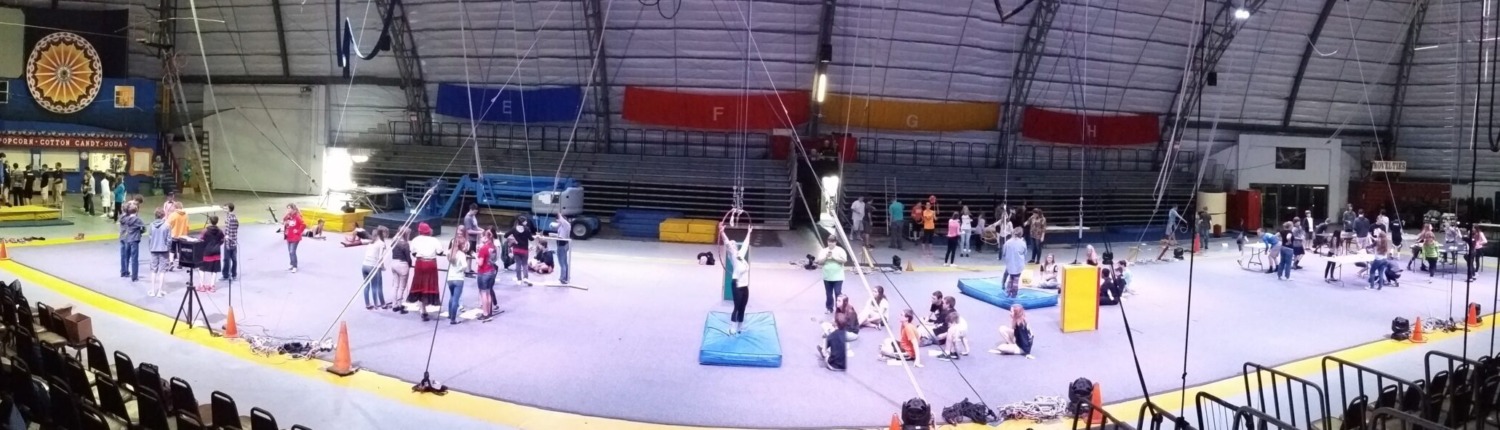
Ideal for, but not limited to science, technology, engineering, art and math students. This Project-Based Learning exploration, presented by The Circus Arts Conservatory’s Education Program, integrates Science and Art in the classroom. Students are asked to choose and research a circus act. Once the science of motion has been explained and understood, as well as information about the circus act, the students will demonstrate their knowledge of physics and engineering by creating a model of their circus act in the style of Alexander Calder.
- Ideal for grades 5-8.
- Program is off-campus at The Circus Arts Conservatory’s Sailor Circus Arena and in the classroom.
At a Glance
Key Facts
- The program is presented by The Circus Arts Conservatory's Education Program.
- It integrates Science and Art in the classroom through Project-Based Learning.
- Students choose and research a circus act as part of the project.
- Students create a model of their circus act in the style of Alexander Calder.
- The program is ideal for grades 5-8.
- It takes place off-campus at The Circus Arts Conservatory's Sailor Circus Arena and in the classroom.
Frequently Asked Questions
What is the Alexander Calder and Newton's Laws of Motion program?
It is a Project-Based Learning exploration presented by The Circus Arts Conservatory's Education Program that integrates Science and Art by having students study circus acts and the physics of motion, then build a model in the style of Alexander Calder.
Who is this program designed for?
It is ideal for, but not limited to, science, art, technology, and math students, and is designed for grades 5-8.
Where does the program take place?
The program takes place off-campus at The Circus Arts Conservatory's Sailor Circus Arena and in the classroom.
What do students do in this program?
Students choose and research a circus act, learn about the science of motion, and then demonstrate their knowledge of physics and engineering by creating a model of their circus act in the style of Alexander Calder.
Who can I contact for more information about this program?
You can contact Karen Bell at 941.355.9335, ext. 302 for more information.